The short version
By early November, my souvenir website could take a customer’s photo, turn it into one of eight art styles and show it on a mug in a 3D scene. It had a page for business customers in six industries, an enquiry form and a blog.
What it didn’t have was a photo of a single real product. The four pieces in the showcase were AI illustrations, labelled as such, waiting for real photos. The machines to make the products hadn’t arrived, so there were no samples to photograph, and the most important part of the site couldn’t be tested.
I’d spent two weeks planning before building anything. None of that planning asked the question that mattered most: what real thing do I need before I can test this?
What the website was for
The idea was personalised souvenirs made in New Zealand. A customer uploads a photo and some words, and we turn them into something physical: a mug, a plaque, an acrylic print, a card. Some pieces carry an NFC tag that opens a page of messages, recordings and links when you tap it with a phone.
So the website had one core job. Show people what their photo would look like as a real object, then make that object.
Two weeks of planning
I wanted the plan to be complete before any code was written. I thought through the copy, payments, membership, loyalty points and discounts. I compared Shopify, WordPress and building our own, and chose to build our own on Next.js and Vercel.
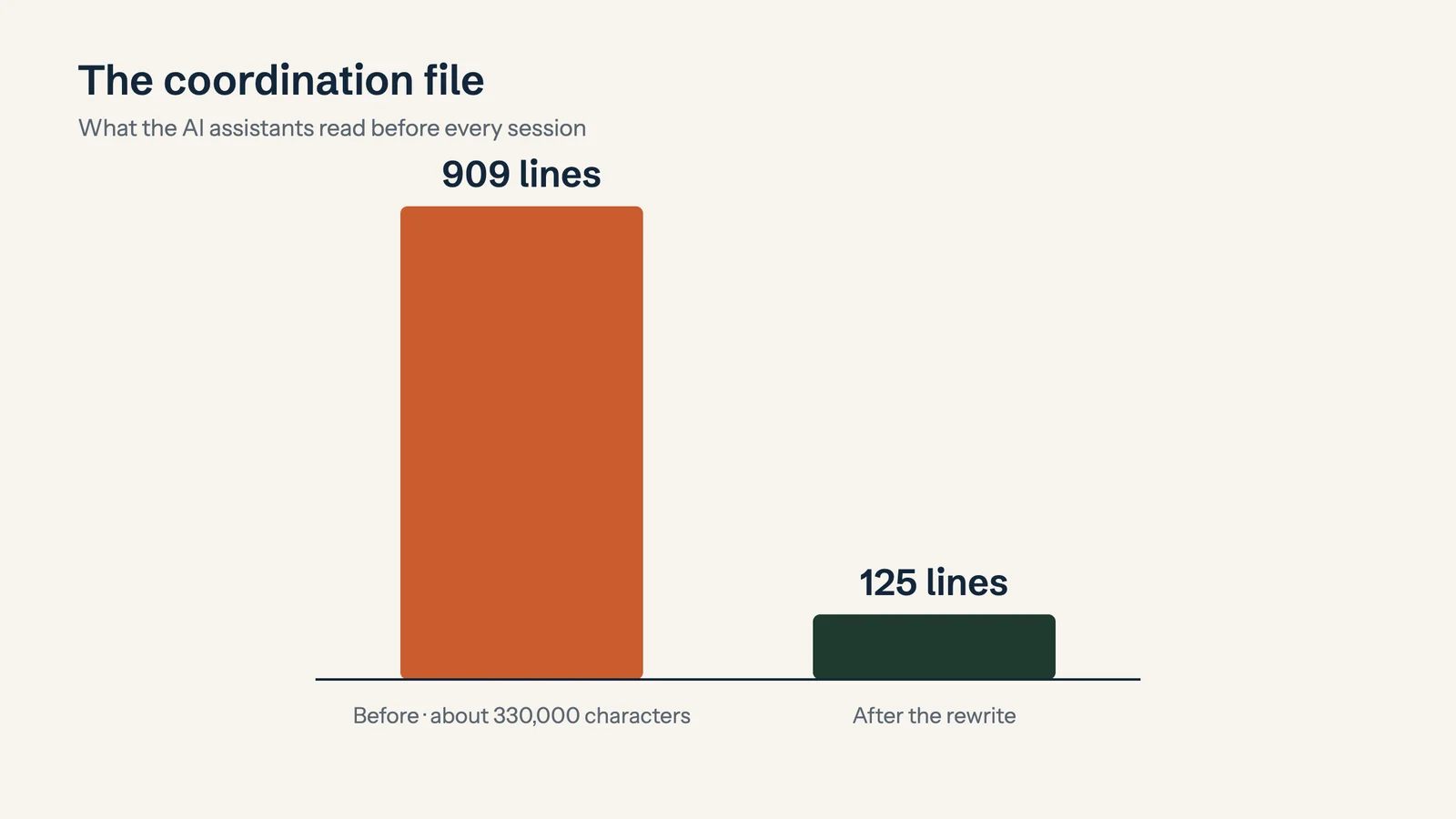
The planning documents grew to match. The main file the AI assistants used to coordinate the project eventually reached 909 lines, around 330,000 characters. A new AI session couldn’t read it properly, so we had to rewrite it down to 125 lines.
The thing the plan didn’t cover
Everything on the site depended on one physical step: making a real sample. The project file said it plainly: real product details would come once the equipment arrived and the blank stock was counted.
Until then, nothing downstream could be checked against reality.
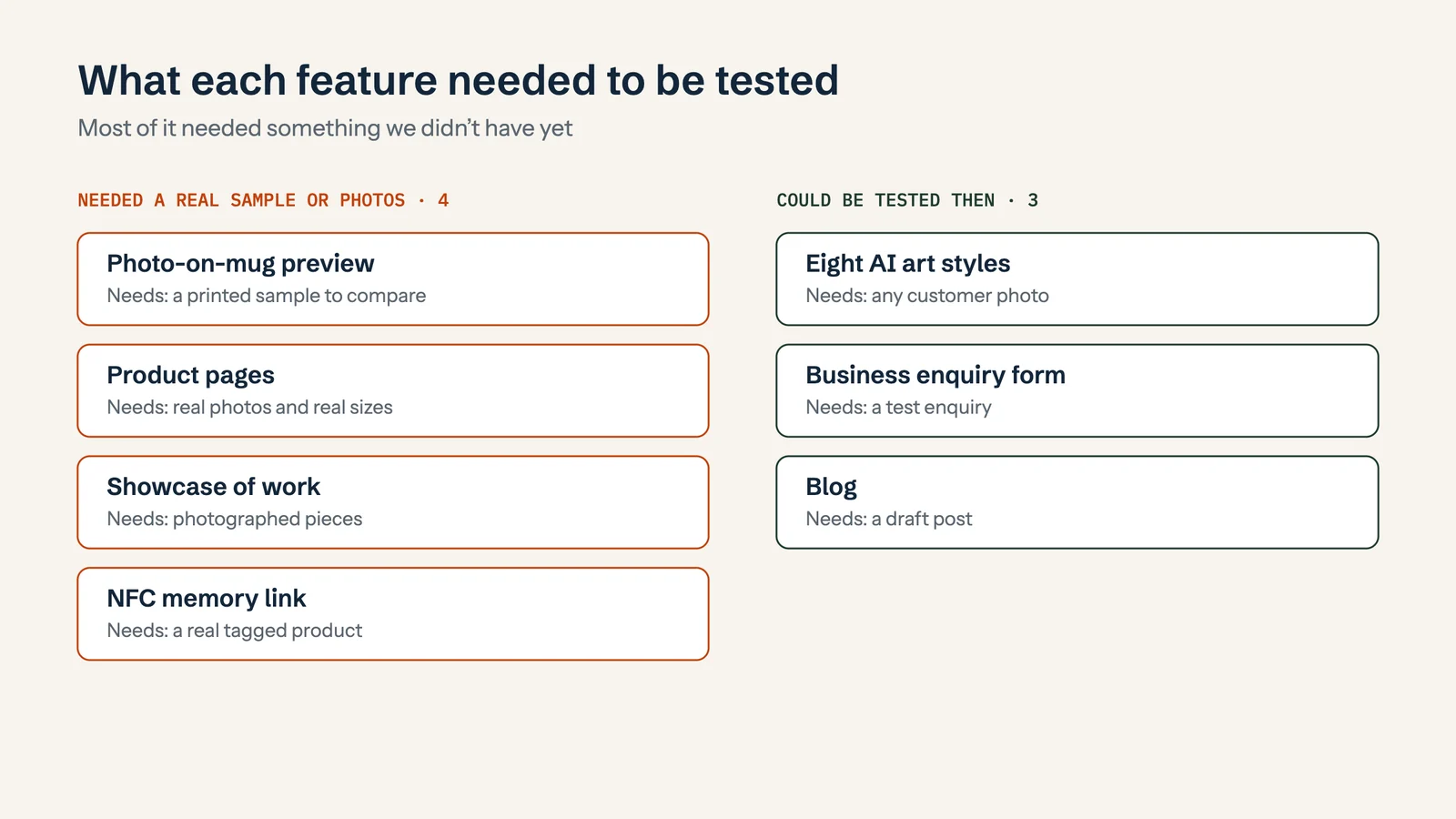
- The preview showed a customer’s photo on a mug. Nobody could hold the printed mug next to the screen and see whether they matched.
- The product pages needed real photos and real sizes. Both were waiting on samples.
- The showcase had four pieces. All four were labelled AI illustrations.
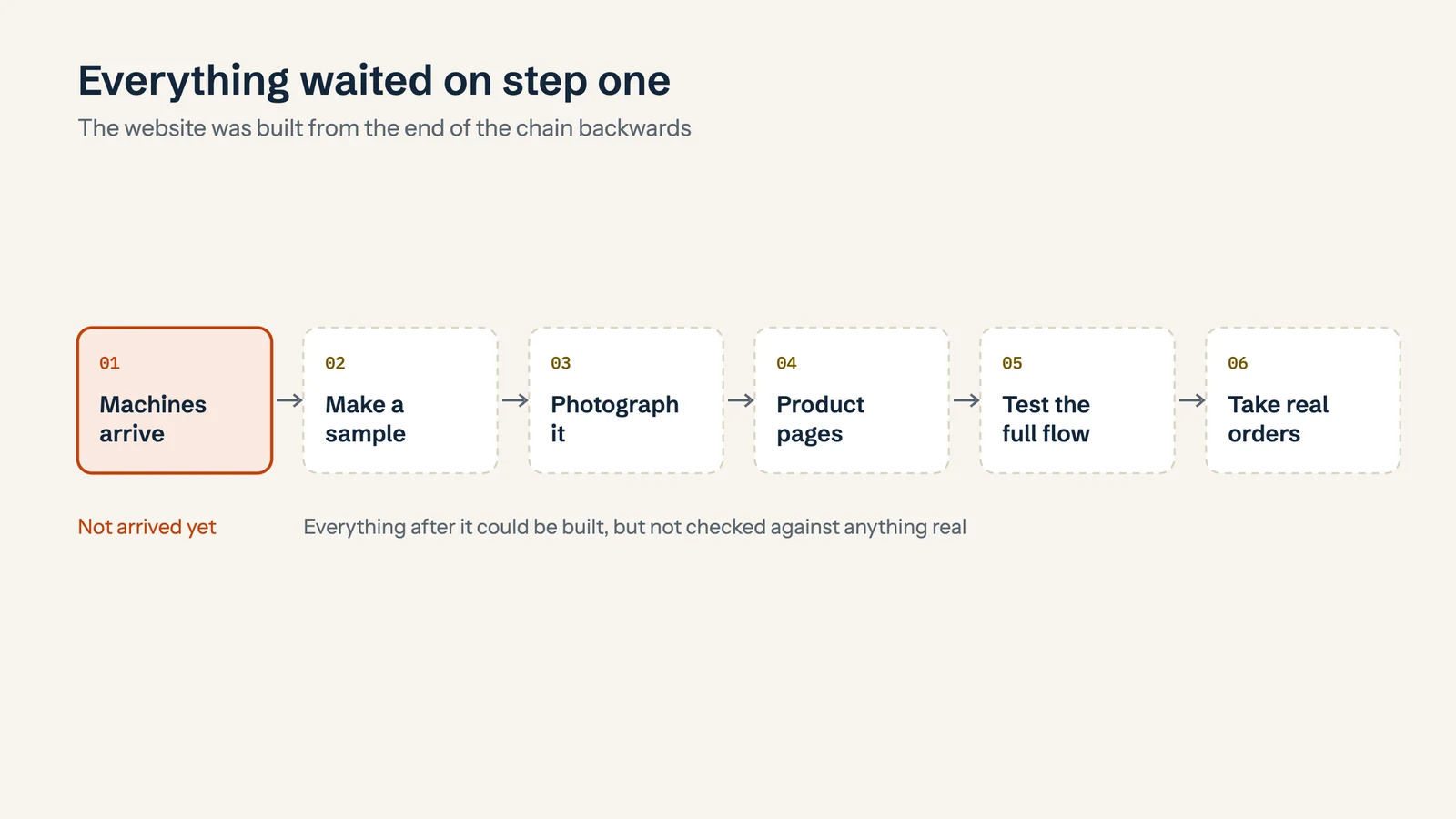
The site looked busy and felt empty. It had features, but no way to tell whether the most important one worked.
Built is not the same as tested
A feature is only finished when you’ve checked it against the real thing it’s meant to handle. For a shop, that means a real product. For an operations system, it means the spreadsheet staff actually use. For an invoice tool, it means a pile of real supplier PDFs.
When I went back through the list of what the site could do, most of it needed something I didn’t have yet.
What I’d do now
My thinking has changed since then. As I put it recently: I used to want a grand architecture and a perfect framework, and for a long time nothing was ready for anyone to use or comment on. Now it’s one small feature a day, and a small prototype people can use straight away and improve as they go.
For a project like this, that means:
- Start with one real product. One sample, photographed on a phone in good light, is worth more than eight AI art styles.
- Write the plan on one page. Two weeks of planning produced a lot of detail about things we couldn’t test. One page forces you to choose. I wrote about that page in the previous post.
- Next to every feature, write what real thing it needs. If you don’t have it yet, the feature waits.
- Build the part you can test this week. Then put it in front of someone real.
You can ask AI to do the sorting for you:
Here is my plan. For each feature, tell me what real input I need to test it properly (a real product, real photos, real customer data, a real order). Mark whether I have that input today. Then split the plan into “can test this week” and “blocked”, and only build the first group.
Before you build, check
- What’s the one physical or real-world thing your project depends on? Do you have it yet?
- For each feature, can you name the real input you’ll test it with?
- Is anything on your site an illustration standing in for something real? Is it labelled?
- What could a real person use this week?